What Makes 1121 Basmati Rice the Best Choice for Biryani?
If you have ever cooked biryani and watched the grains clump together, break apart mid-layer, or lose their shape under the dum, the problem was not the spices. It was the rice. The variety, the aging, and the milling method decide everything before you even turn on the stove. This is what 1121 Basmati does differently.
What Does "1121" Mean in Basmati Rice?
The number 1121 is a variety code, not a quality grade. It refers to a specific cultivar of Basmati rice developed by the Indian Agricultural Research Institute in Karnal, Haryana — the same city where Double Chabi has been milling rice since the 1950s.
What sets the 1121 variety apart from other Basmati types is grain length. Raw 1121 Basmati averages between 8.30mm and 8.40mm per grain. After cooking, that same grain elongates to over 20mm — more than double its original length. No other commercial Basmati variety achieves this consistently.
This elongation is not a visual trick. It is the result of the grain's specific starch structure. The amylose content in 1121 Basmati is higher than in shorter-grain varieties, which means the grains absorb moisture more slowly, cook more evenly, and separate cleanly rather than sticking together.
Why Grain Length Matters in Dum Cooking
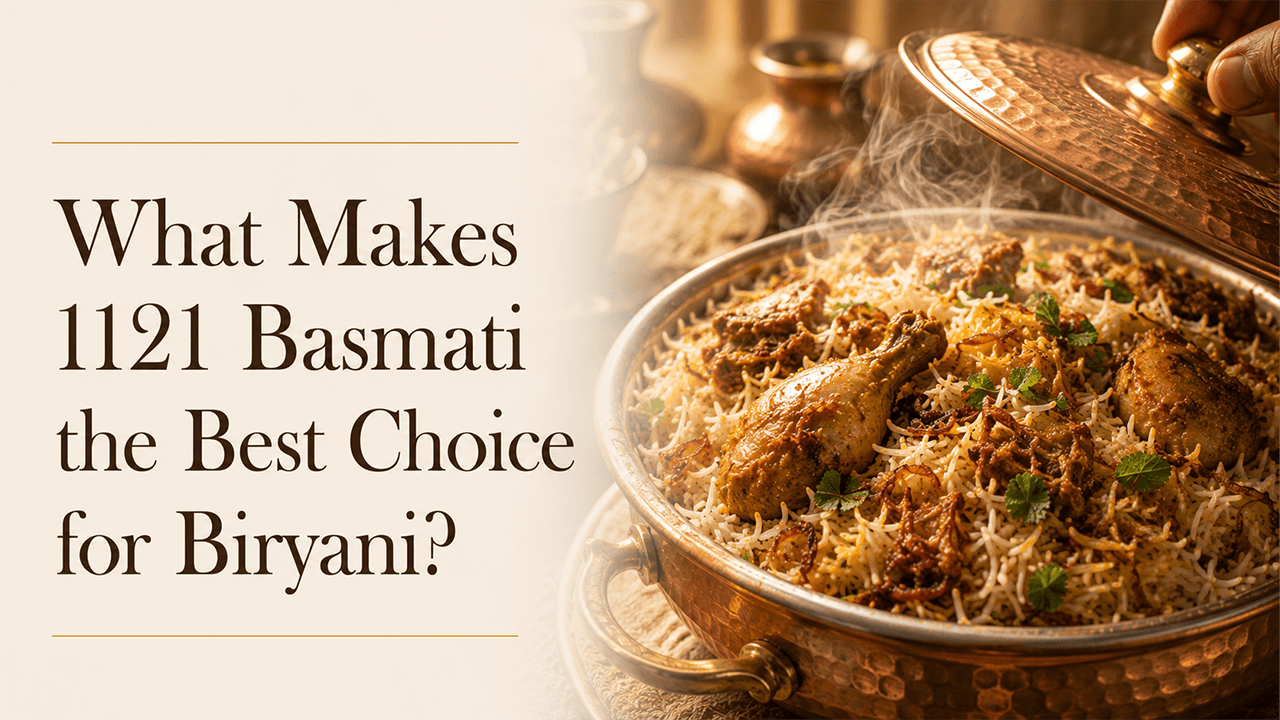
Biryani cooked dum-style involves two phases: parboiling the rice and then slow-cooking it layered with the meat or vegetables in a sealed pot. During the second phase, the rice absorbs the flavours from the layer below while continuing to cook in residual steam.
In this environment, grain length and structural integrity are everything. A shorter or less-robust grain breaks during the layering process or becomes mushy under the dum heat. A long-grain variety like 1121 Basmati holds its shape through both phases, producing the separate, elongated grains that every good biryani demands.
Professional chefs and home cooks who have switched to 1121 Basmati describe the same result: the grains stand individually on the plate, each one flavoured but intact. That is not technique. That is the grain doing what it was grown to do.
The Role of Aging in Basmati Performance
Buying 1121 Basmati from any source is not the same as buying properly aged 1121 Basmati. Aging is where most rice brands cut corners — and where the performance difference becomes measurable in the kitchen.
When Basmati rice is freshly milled, its moisture content is between 13 and 14 percent. At this moisture level, the grain is still slightly soft internally, which means it overcooks easily and loses its elongation during dum. As rice ages in climate-controlled warehouses, moisture drops to below 12 percent. The internal starch structure firms up. The aromatic compounds that give Basmati its signature fragrance concentrate.
After 12 months of proper aging, 1121 Basmati performs differently in every measurable way: the aroma is stronger, the elongation is more consistent, and the cooked grain stays separate for longer on the plate.
Double Chabi ages its 1121 Basmati for a minimum of 12 months in temperature-regulated warehouses in Karnal before milling and packaging. This is not a marketing claim. It is an operational commitment that shows up in the working capital required to hold that much rice off the market for a full year.
"The brands that do not age their rice are not selling you a bad product. They are selling you a different product. The grain exists at a different point in its chemical journey. When you cook it, you feel that difference — even if you cannot name it." — Double Chabi, Karnal
1121 vs Pusa 1509 vs Traditional Basmati — A Practical Comparison
| Variety | Raw Grain Length | Cooked Length | Aroma | Best Use |
|---|---|---|---|---|
| 1121 Basmati (Double Chabi) | 8.30–8.40mm | 20mm+ | Premium | Dum biryani · Pulao · Festive cooking |
| Pusa 1509 | 7.50–7.80mm | 14–16mm | Moderate | Everyday cooking · Jeera rice |
| Traditional Basmati (Taraori) | 7.20–7.60mm | 13–15mm | High | Dal chawal · Light pulao |
| PR-106 (Non-Basmati) | 5.50–6.00mm | 8–10mm | Low | Daily cooking · Industrial use |
How to Identify Real Aged 1121 Basmati Before Buying
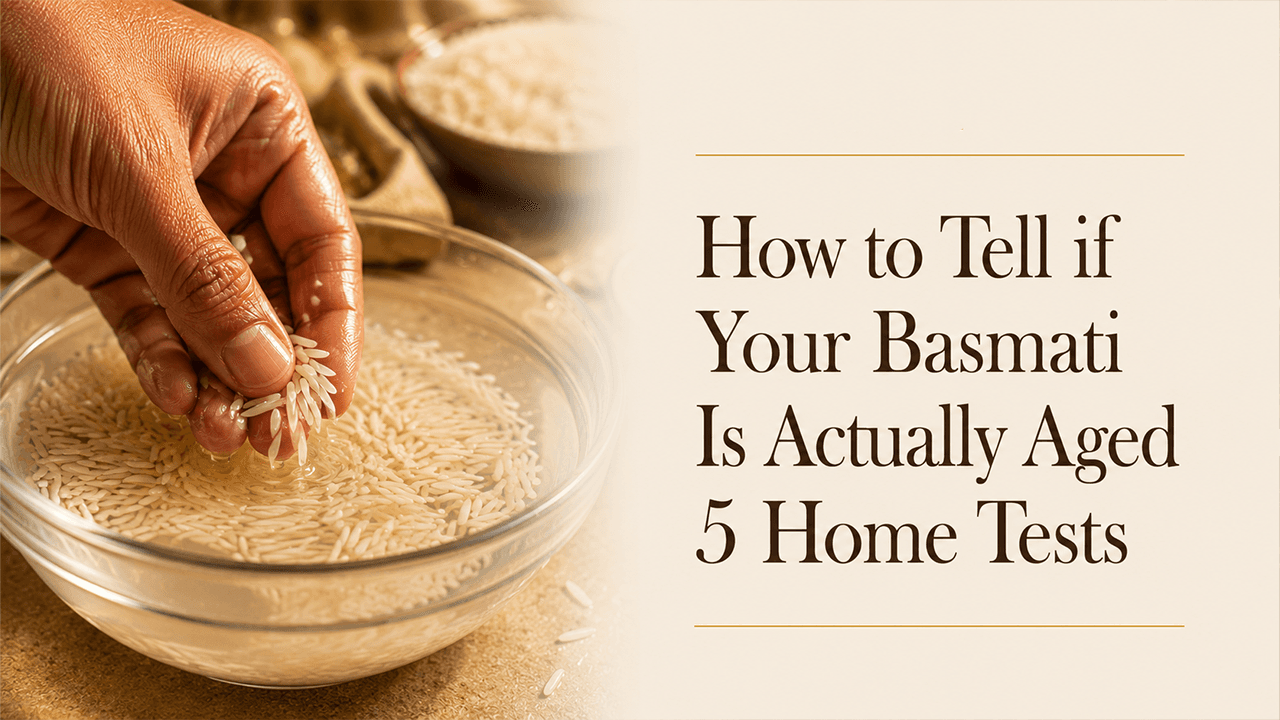
The simplest check is the colour. Freshly milled 1121 Basmati is bright white. Properly aged 1121 Basmati has a very slight ivory or cream tone — almost imperceptible, but present. This colour shift is a natural result of the aging process and indicates the moisture has dropped to the correct level.
The second check is weight. Pick up a handful of raw grains. Aged grain feels lighter than fresh grain for the same volume. If the grain feels dense and heavy, it has not aged sufficiently.
The third check is aroma. Rub a few raw grains between your palms and hold them near your nose. Properly aged 1121 Basmati has a distinct fragrance even raw — slightly nutty, with the unmistakeable Basmati floral note. Fresh grain has almost no aroma before cooking.
Why Double Chabi 1121 XXXL Is the Miller's Choice
Double Chabi's 1121 XXXL Basmati is sourced from the Taraori belt in Karnal — the same agricultural region that has produced Basmati for generations. The XXXL classification refers to grain length: only the longest-grain lots from each harvest are selected for the 1121 XXXL range.
After harvest, the paddy is held in ventilated warehouses for 12 to 18 months before milling. The milling process uses a sortex colour sorter to remove any broken or discoloured grains before packaging. The result is a rice that performs consistently across every batch, every season.
Double Chabi 1121 XXXL is available in 1kg, 5kg, 10kg, 25kg, and 30kg packs through doublechabirice.com and on Blinkit for quick commerce delivery across North India.
The short answer: 1121 Basmati produces the longest, most separated, most aromatic grain of any commercial Basmati variety when cooked. Properly aged 1121 Basmati produces it consistently. That is why it is the choice for biryani.
Frequently Asked Questions
- What is the best Basmati rice variety for biryani?
- 1121 Basmati is widely considered the best variety for biryani because of its exceptional grain length (raw 8.3–8.4mm, cooked 20mm+), high amylose content that prevents sticking, and concentrated aroma after 12+ months of aging. It holds its shape through dum cooking better than any other commercial Basmati variety.
- What does 1121 mean in Basmati rice?
- 1121 is a variety code for a specific Basmati cultivar developed by the Indian Agricultural Research Institute in Karnal, Haryana. It is named after the institute's variety development program. The 1121 designation indicates this specific genetic line, known for producing the longest grain length in the commercial Basmati category.
- How long should 1121 Basmati be aged?
- A minimum of 12 months of proper aging in climate-controlled storage is required for 1121 Basmati to reach optimal cooking performance. During this period, moisture content drops from 13–14% to below 12%, aroma compounds concentrate, and the internal starch structure firms up. Double Chabi ages its 1121 Basmati for 12 to 18 months before milling.
- Is Double Chabi 1121 XXXL available online?
- Yes. Double Chabi 1121 XXXL Basmati Rice is available on doublechabirice.com in 1kg, 5kg, 10kg, 25kg, and 30kg packs. It is also available on Blinkit for quick commerce delivery across North India.
- What is the difference between 1121 and Pusa 1509 Basmati?
- 1121 Basmati has a longer raw grain (8.3–8.4mm vs 7.5–7.8mm for Pusa 1509) and cooks to over 20mm elongation vs 14–16mm for Pusa 1509. 1121 also has a stronger aroma and is preferred for dum biryani and festive cooking. Pusa 1509 is a faster-maturing variety better suited for everyday cooking and jeera rice.