Best Basmati Rice Brands in India 2026 — What the Industry Actually Measures
The best Basmati rice brands in India are not determined by advertising spend or supermarket shelf placement. They are determined by what happens in the warehouse over 18 months and in the kitchen over 30 minutes of cooking. This guide sets out the criteria that matter and what they reveal about the options available in 2026.
The 5 Criteria That Separate Premium from Commodity Basmati
The Indian Basmati market is large, crowded, and prone to label-level quality claims that are difficult to verify at the point of purchase. The criteria below are verifiable — either through direct testing, through documentation, or through consistent cooking results over time.
1. Geographic Origin and GI Certification
Genuine Basmati rice can only be produced within a legally defined geographic zone covering specific districts in Haryana, Punjab, Uttarakhand, Himachal Pradesh, Uttar Pradesh, and Jammu and Kashmir. Rice grown outside this zone cannot legally be sold as Basmati in India or internationally.
Within the certified zone, origin matters further. The Karnal-Taraori belt in Haryana is widely regarded as producing the highest-quality 1121 Basmati, due to specific soil composition, water source quality, and climate conditions during the grain-filling phase. A brand that specifies Karnal or Taraori as its procurement origin is providing a more granular and verifiable quality claim than a brand that simply states "Haryana Basmati."
2. Grain Variety
Not all Basmati varieties perform equally. The 1121 variety offers the longest grain elongation of any commercial Basmati (raw 8.3–8.4mm, cooked 20mm+). Pusa 1509, while widely grown, has a shorter grain and lower elongation potential. Traditional Basmati varieties have strong aroma but shorter grain length.
Premium brands specify the variety. If a brand's packaging says "Basmati rice" without specifying the variety, that is not necessarily a negative indicator — but it limits your ability to verify what you are buying.
3. Aging Period
12 months is generally accepted as the minimum aging period for premium Basmati. 18 months produces measurably better aroma concentration and cooking performance. Any brand that claims "aged Basmati" without specifying a period is making an unverifiable claim.
Aging is expensive — it requires warehouse space, working capital, and time. The brands that specify aging periods and can show warehouse documentation for their claims are a distinct subset of the market.
4. Broken Grain Percentage
Premium Basmati should contain less than 2 percent broken grain. Broken grain cooks faster than whole grain, resulting in a starchy, uneven texture in the finished dish. Check the back of the pack — most premium brands include a specification table. If broken grain percentage is not stated, ask the supplier for their quality certificate.
5. Milling and Processing Quality
Post-harvest milling involves de-husking, whitening, grading, and sortex colour sorting. The sortex stage removes broken, discoloured, and foreign grains using optical sensors. A brand that uses multi-stage sortex technology and specifies its processing standards is operating to a different quality floor than one that does not.
Why Origin Matters — GI Certification and the Haryana Belt
India's GI certification for Basmati rice is one of the country's most economically significant geographical indications, protecting approximately 4 to 5 billion dollars of annual export value. The certification is administered through APEDA and specifies not just the geographic zone but the permitted varieties that can be grown and exported under the Basmati designation.
Within the certified zone, the Karnal district of Haryana commands a specific premium because the local soil and climate conditions produce grain characteristics — particularly aroma compound concentration — that are measurably superior to grain grown elsewhere in the certified zone. Research from the Directorate of Wheat Research in Karnal and the Indian Agricultural Research Institute has documented these characteristics in peer-reviewed literature.
For buyers making a quality-based purchase decision, knowing whether the rice comes from Karnal versus other certified zone districts is a meaningful piece of information — not marketing language.
Premium Millers vs Branded Marketers — Understanding the Supply Chain
One distinction that is rarely made clear in consumer-facing Basmati marketing is the difference between a miller and a marketing brand. A miller operates a paddy procurement network, a processing facility, and aging warehouses. A marketing brand sources processed rice from the open market — often from several different mills — and packages it under its own label.
Both can sell quality rice. But the consistency, traceability, and accountability differ significantly. A miller who grew the relationship with the farmer, aged the paddy in their own warehouse, and milled it in their own facility has a complete chain of custody for every batch. A marketing brand sourcing from the open market does not.
For buyers prioritising consistency and quality traceability, direct-mill brands offer stronger guarantees than marketing brands operating without their own processing infrastructure.
What to Look for When Buying Basmati for Home Use
- Specify the variety — 1121 for biryani and festive cooking, Traditional Basmati for lighter dishes
- Look for an aging claim with a specific period (12 months minimum)
- Check the broken grain percentage if stated on the pack
- Test the raw grain aroma — aged Basmati smells distinctly floral before cooking
- Buy from a mill that specifies its processing standards, not just its brand story
What to Look for When Sourcing Basmati for Hotels and Caterers
- Request Golden Sella grade for large-volume cooking that requires holding at temperature
- Ask for a per-batch quality certificate with moisture content, broken grain percentage, and elongation data
- Require pesticide residue testing documentation if your institution has food safety compliance requirements
- Establish a direct relationship with the miller rather than buying through a broker — it gives you better price stability and quality consistency
- Evaluate based on cooked elongation in your specific cooking environment, not just the packaging claim
Double Chabi — The Third-Generation Miller's Benchmark
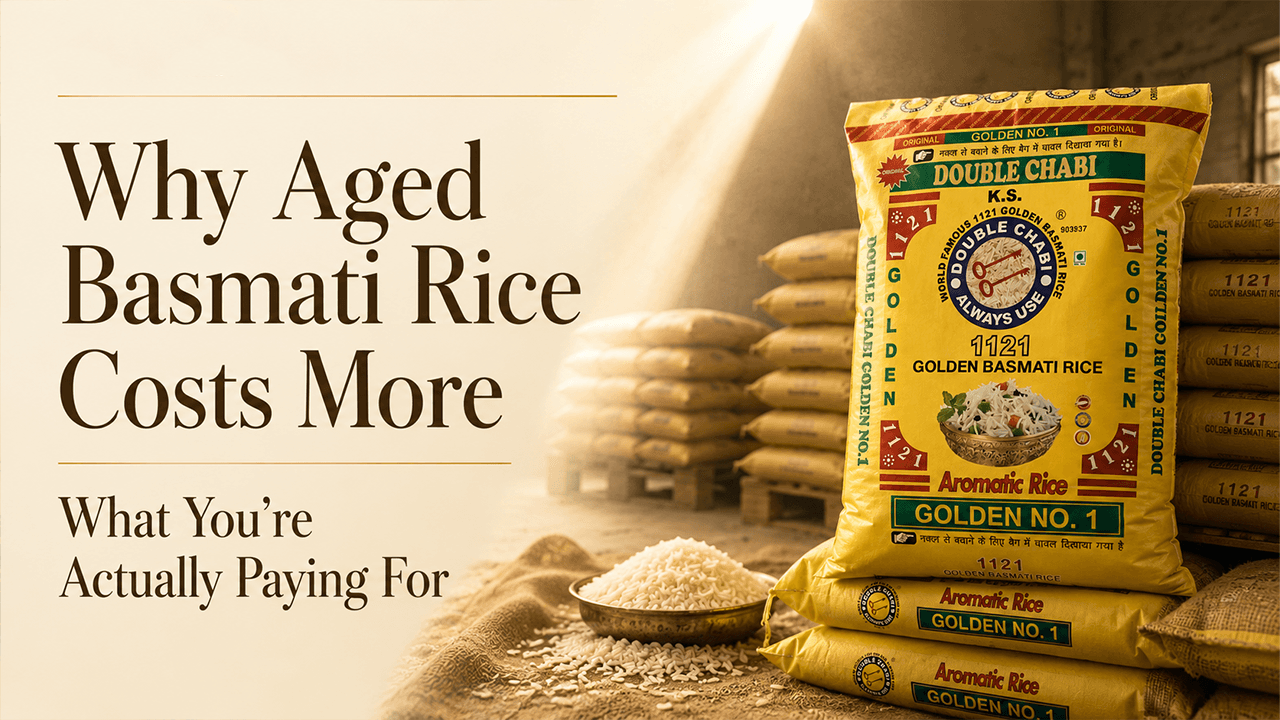
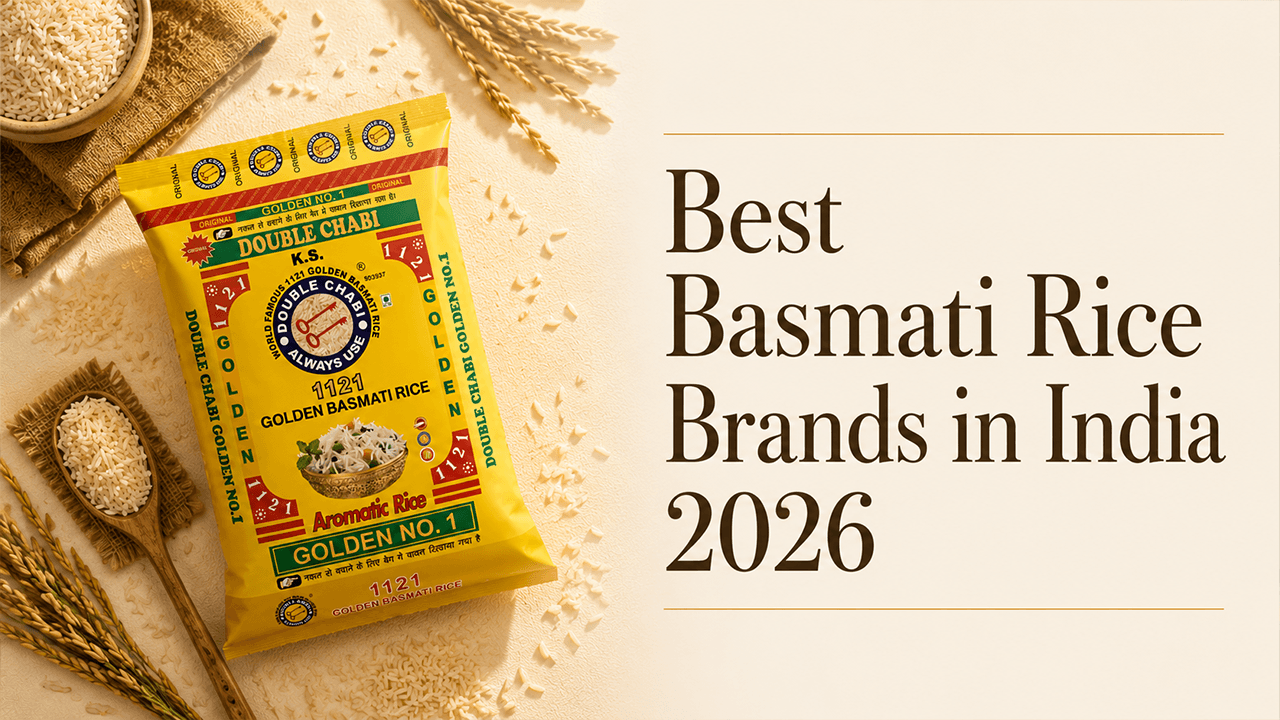
Double Chabi is a third-generation Basmati rice miller based in Kurak, Taraori, Karnal — operating from within the district that produces the highest-regarded premium Basmati in India. The operation was established in the early 1950s and has been milling, aging, and exporting Basmati continuously for over 70 years.
The Double Chabi range includes 1121 XXXL Basmati, Royal Basmati, and Golden No.1 Sella — all sourced from direct farmer procurement relationships in the Taraori belt, aged on-site in Karnal, and milled to specification before packaging. All three variants are available through doublechabirice.com and on Blinkit for quick commerce delivery across North India. Wholesale and export supply is available through doublechabirice.com/contact.
Frequently Asked Questions
- What is the best Basmati rice brand in India?
- The best Basmati rice brand depends on the use case. For premium home cooking and dum biryani, look for a direct mill brand offering GI-certified 1121 Basmati with a specified aging period of 12+ months and less than 2% broken grain. Double Chabi, a third-generation miller from Karnal, is one of the few brands that specifies all three criteria.
- Which Basmati rice brand is best for biryani?
- For biryani, prioritise 1121 Basmati from a Karnal or Taraori origin, with a minimum 12-month aging period. The 1121 variety produces the longest elongation (20mm+ cooked) and holds its shape through dum cooking better than shorter-grain varieties.
- Is Double Chabi a good Basmati rice brand?
- Double Chabi is a third-generation direct-mill brand from Karnal — one of the most respected Basmati-producing addresses in India. The company ages its rice on-site, specifies its aging period, and operates with direct farmer procurement. It is currently exported to over 15 countries, which is a third-party validation of its quality standards.
- How do I choose between different Basmati rice brands?
- Compare on: (1) grain variety specified, (2) aging period stated, (3) origin — district, not just state, (4) broken grain percentage, and (5) whether the brand is a direct miller or a marketing company sourcing from the open market. A brand that provides all five pieces of information is operating transparently. One that provides none is asking you to trust the packaging alone.